The Indian commodities market witnessed a sharp decline on the first trading day of July as both gold and silver prices registered significant losses on the Multi Commodity Exchange (MCX). Gold futures dropped by ₹1,922, while silver futures recorded a much steeper fall of ₹6,041, surprising investors and traders who had expected precious metals to remain relatively stable amid global economic uncertainty.
The sharp correction comes after a period of strong gains in precious metals, leading many market participants to book profits. Along with profit-taking, stronger global market sentiment, movements in the US dollar, and expectations surrounding interest rates also contributed to the decline in bullion prices.
Although the sudden fall has created short-term uncertainty, analysts believe that precious metals continue to play an important role in long-term investment portfolios.
Gold and Silver Witness Heavy Selling Pressure on MCX
Gold futures opened the July trading session under pressure and continued to decline throughout the day. By the end of trading, gold prices had fallen by ₹1,922, reflecting increased selling activity across the commodity market.
Silver experienced an even larger correction, losing ₹6,041 on MCX. The white metal has historically been more volatile than gold due to its dual role as both an investment asset and an industrial metal. As a result, silver often reacts more aggressively to changes in market sentiment and economic expectations.
The decline in precious metals coincided with improving investor confidence in riskier assets such as equities. When stock markets perform well, some investors reduce their exposure to safe-haven assets like gold and silver, resulting in lower demand.
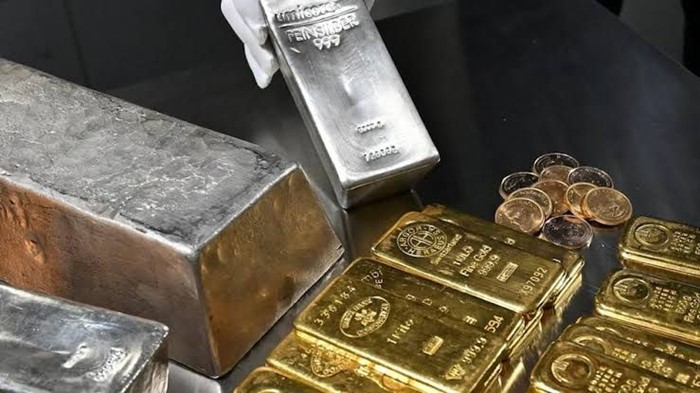
International market trends also influenced domestic prices. Gold prices generally move in response to changes in the US dollar, Treasury yields, inflation expectations, and central bank policies. Any improvement in global economic outlook often reduces demand for safe-haven investments.
Market experts noted that the correction also reflected profit-booking after recent rallies. Traders who had accumulated positions during earlier price increases chose to lock in profits at the beginning of the new month.
Key Factors Behind the Sharp Fall in Bullion Prices
Several domestic and international factors contributed to the steep decline in gold and silver prices.
One major reason is the strength of the US dollar. A stronger dollar makes gold more expensive for international buyers, often putting downward pressure on global bullion prices. Since Indian gold prices closely follow international trends, domestic markets also experienced weakness.
Interest rate expectations remain another important factor. Investors continue monitoring statements from major central banks regarding future monetary policy. If markets expect higher interest rates to remain in place for longer, non-yielding assets such as gold often become less attractive compared to interest-bearing investments.
Another factor influencing prices is changing investor sentiment. Improved economic data and stronger stock markets encourage investors to shift capital toward equities and other growth assets instead of traditional safe havens.
Silver prices were additionally impacted by concerns regarding industrial demand. Since silver is widely used in electronics, solar panels, automobiles, and manufacturing industries, any uncertainty regarding industrial growth can lead to greater price volatility.
Domestic currency movements also play a role. Changes in the Indian rupee against the US dollar directly affect imported commodity prices, including gold and silver.
Analysts believe that despite the current correction, long-term fundamentals for precious metals remain supported by geopolitical uncertainties, inflation risks, and central bank gold purchases across various countries.
What Investors Should Do After the Price Decline
The sharp fall in gold and silver prices has created mixed reactions among investors. While short-term traders may view the correction as a sign of continued volatility, long-term investors often consider such declines as potential buying opportunities.
Financial experts recommend avoiding panic selling during periods of market volatility. Instead, investors should evaluate their financial goals and investment horizon before making decisions.
Gold continues to serve as an effective hedge against inflation and currency fluctuations. Many financial planners recommend allocating a portion of an investment portfolio to gold for diversification and long-term wealth preservation.
Silver also remains attractive due to its growing industrial applications, particularly in renewable energy technologies, electric vehicles, and electronics manufacturing. However, investors should be prepared for higher price fluctuations compared to gold.
Experts also advise using systematic investment approaches rather than investing large amounts during periods of market uncertainty. Gradual accumulation through periodic purchases can help reduce the impact of short-term price swings.
As global economic conditions continue to evolve, precious metal prices are likely to remain sensitive to inflation data, interest rate decisions, geopolitical developments, and movements in international financial markets.
Outlook for Gold and Silver Markets
Despite the steep decline on the first trading day of July, many market analysts believe that gold and silver continue to hold long-term investment value. Short-term corrections are common in commodity markets, especially after extended rallies and periods of heightened investor optimism.
Going forward, traders will closely watch global inflation figures, US Federal Reserve policy decisions, central bank actions, and geopolitical events for further direction. While volatility may persist in the coming weeks, both gold and silver remain important assets for portfolio diversification and risk management.